Editorial + Minimal · AI image style prompt
Annotated Absence
Photographic subjects dissolve into white paper, kept as hand-traced contours, intimate word labels, and sparse gray fragments.
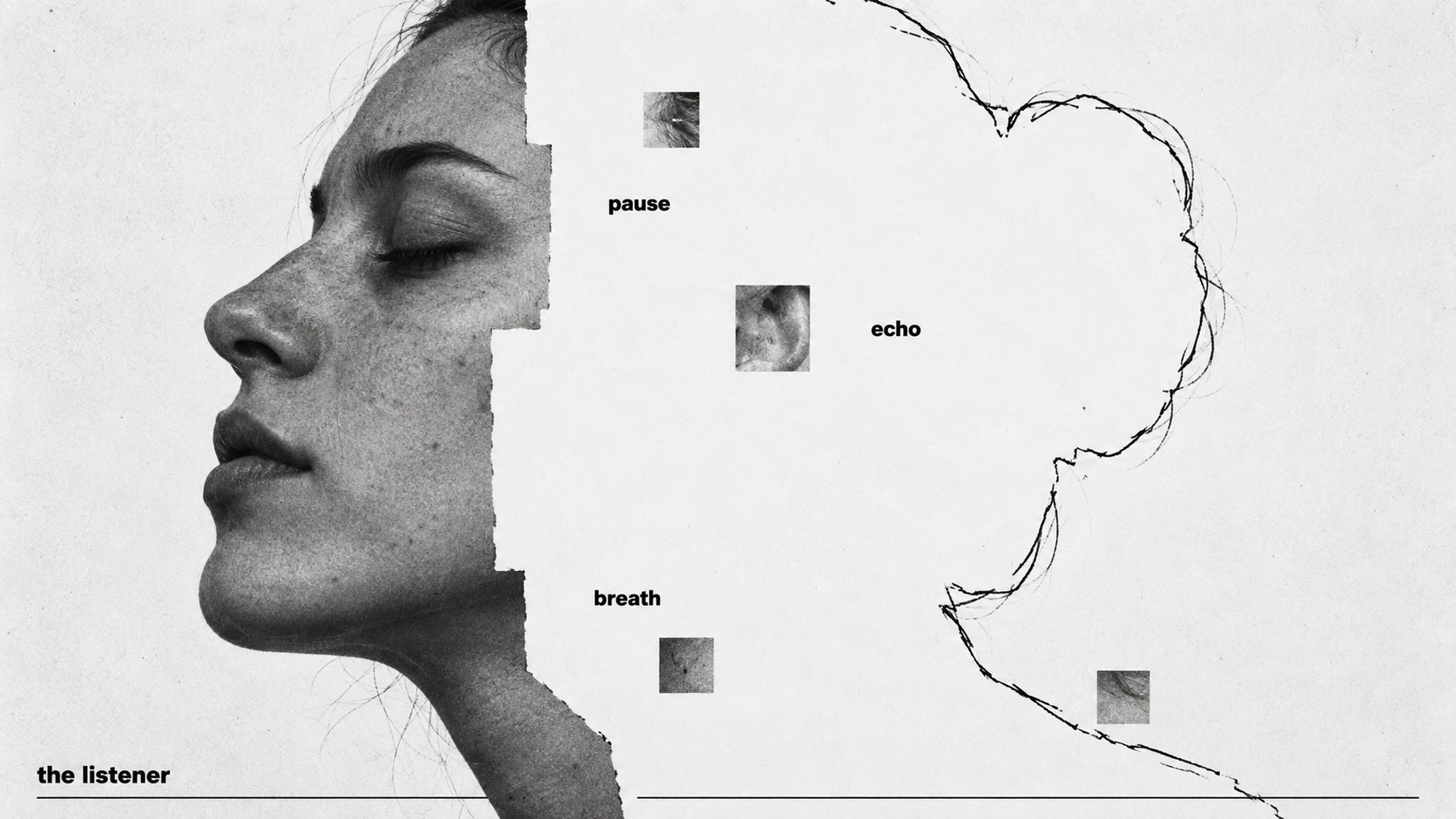
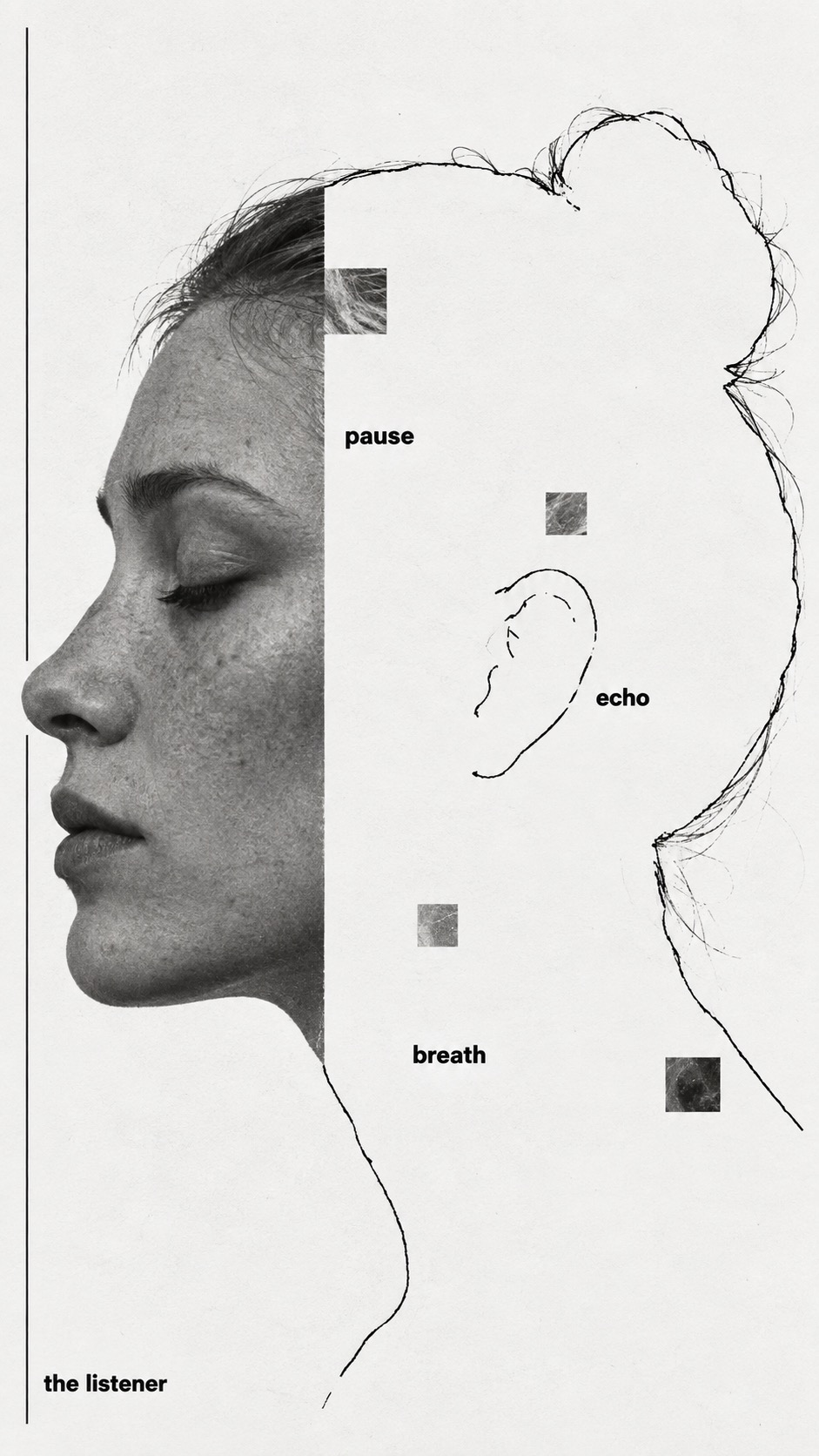
4 example cases
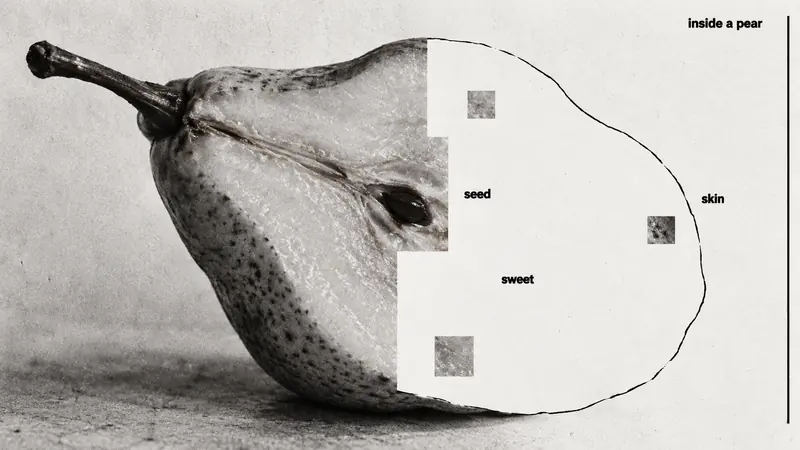
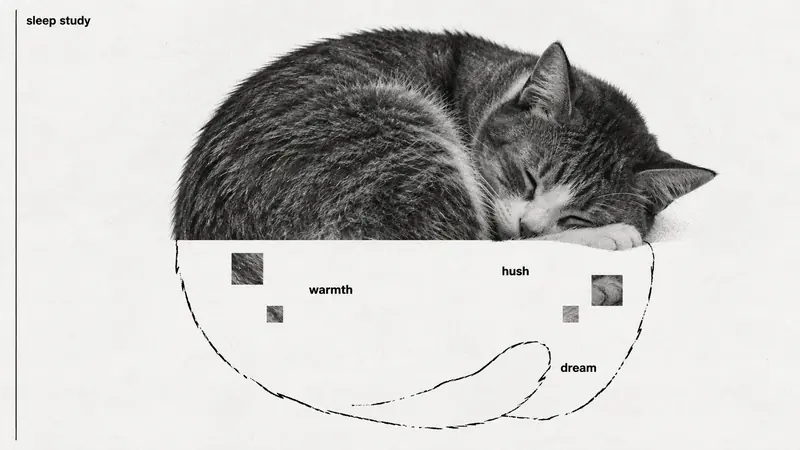
Same style.json, different subjects. Each case's values are in the examples section of the JSON.
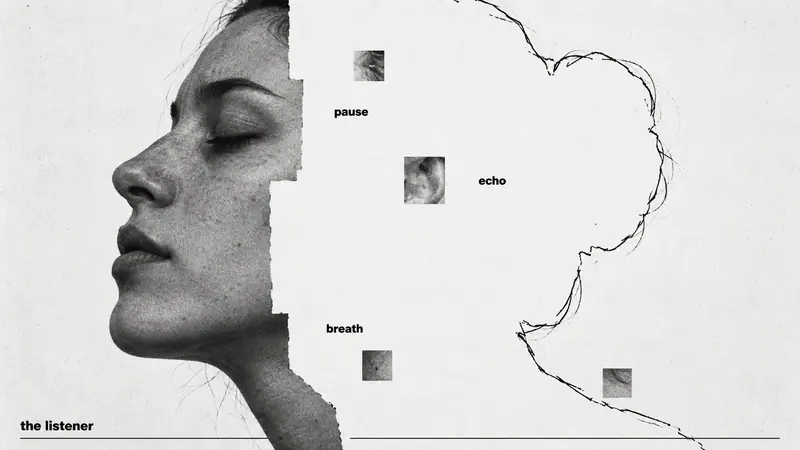
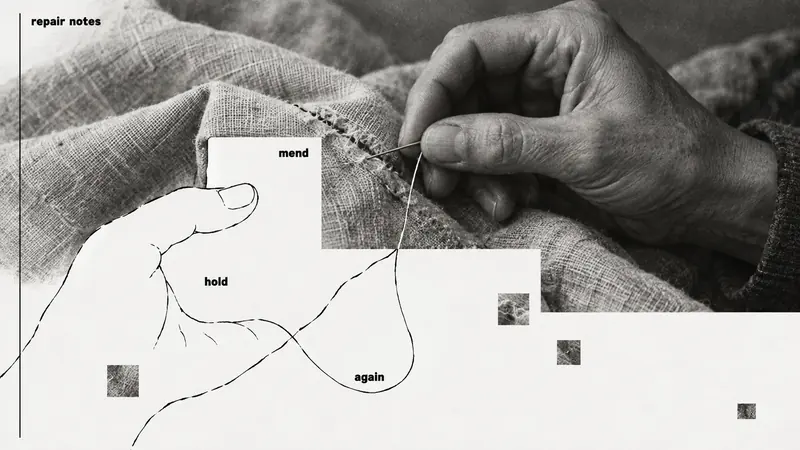
What this style does
A photographic subject yields to white paper, retained as hand-traced contour, intimate word labels and sparse gray image fragments.
Signature traits
- A single large grayscale photographic subject is partially removed by a decisive straight-edged white mask; the absent portion remains legible through a thin irregular black contour continuing the same subject.
- The removed region is predominantly white paper, with a few small bold black lowercase word labels placed at meaningful absent features rather than in a separate legend.
- Sparse grayscale square fragments preserve photographic texture as isolated residual pixels inside the erased region; never a full tiled collage.
- Restrained black, white and gray only; intimate grainy documentary photograph contrasted with flat empty paper and rough hand-traced contour.
- Let the subject determine the mask axis, asymmetric balance, annotation positions and empty-space rhythm; maintain clear continuity between photograph and contour.
- A small title and one black edge rule may frame the specimen, but avoid a large promotional headline or dense informational diagram.
style.json
{
  "style_version": "1.0.0",
  "style_name": "Annotated Absence",
  "style_slug": "annotated-absence",
  "style_summary": "A photographic subject yields to white paper, retained as hand-traced contour, intimate word labels and sparse gray image fragments.",
  "environment_variables": {
    "ASPECT_RATIO": "9:16 or 16:9",
    "STYLE_FIDELITY_ANCHORS": "Prioritized shared visual system",
    "SOURCE_CONTENT_TO_AVOID": "Original content to replace",
    "SUBJECT": "Photographic subject and physical state",
    "ERASURE": "Case-specific transition from photo to contour",
    "LABELS": "Exact lowercase annotations and intended features",
    "MAIN_TEXT": "Exact small title",
    "DESIGN_DIRECTION": "Composition intention for the two ratios",
    "SUBJECT_ACTION": "How the photograph yields to contour and white paper",
    "PRODUCT_OR_PROP": "Residual gray photographic squares and the tracing line",
    "LOCATION": "White paper field occupying the erased region",
    "BACKGROUND_ELEMENTS": "Empty paper, sparse gray fragments, optional thin edge rule",
    "SECONDARY_TEXT": "Intimate lowercase feature labels in the absent region",
    "ACCENT_SYMBOL": "Thin irregular black contour continuing the subject",
    "WARDROBE_STYLE": "Clothing or hair remaining in the photographic remnant"
  },
  "style_fidelity_anchors": [
    "[CORE] A single large grayscale photographic subject is partially removed by a decisive straight-edged white mask; the absent portion remains legible through a thin irregular black contour continuing the same subject.",
    "[CORE] The removed region is predominantly white paper, with a few small bold black lowercase word labels placed at meaningful absent features rather than in a separate legend.",
    "[CORE] Sparse grayscale square fragments preserve photographic texture as isolated residual pixels inside the erased region; never a full tiled collage.",
    "[CORE] Restrained black, white and gray only; intimate grainy documentary photograph contrasted with flat empty paper and rough hand-traced contour.",
    "[FLEX] Let the subject determine the mask axis, asymmetric balance, annotation positions and empty-space rhythm; maintain clear continuity between photograph and contour.",
    "[FLEX] A small title and one black edge rule may frame the specimen, but avoid a large promotional headline or dense informational diagram.",
    "[FLEX] Compose each ratio independently, enlarging the subject enough to read its fine physical details without filling the erased white region."
  ],
  "source_content_to_avoid": [
    "The original curly-haired child and recognizable likeness",
    "Original French anatomy labels and their exact positions",
    "Exact centered half-face vertical source layout across all cases",
    "Source screenshot border, source marks or copied artifacts"
  ],
  "visual_deconstruction": {
    "reference": "A grainy half-face is cut by a straight white boundary; the missing half is implied by loose contour and sparse feature labels with gray square remnants.",
    "hierarchy": "Subject silhouette and photo-white tension first, labels second, residual squares third."
  },
  "composition": {
    "principle": "Treat absence as a shape with the same spatial weight as the photograph, rather than blank background beside a whole cutout.",
    "ratio_adaptation": "Reposition labels and rethink the cut axis or subject pose where needed; preserve the case concept, not identical cropping."
  },
  "typography": {
    "labels": "Small bold lowercase grotesk sans-serif, compact tracking; printed directly in white absent region.",
    "title": "Modest bold grotesk title, much smaller than subject; no faux credits."
  },
  "color_palette": {
    "inks": [
      "paper white",
      "deep black",
      "photographic gray"
    ],
    "proportion": "White paper roughly half or more of composition; black limited to type, contour, shadow and occasional edge rule."
  },
  "image_treatment": {
    "texture": "Fine-to-medium visible analog grayscale photo grain only in photographic subject and gray square remnants; flat nearly clean white paper. Thin uneven black contour with small breaks and occasional retraced edges, not ornate hatching.",
    "lighting": "Soft directional documentary lighting within retained photo, preserving tactile detail."
  },
  "design_rules": [
    "The photo and outlined region must form one physically consistent object or figure.",
    "Put exact requested annotations in the missing region near corresponding features.",
    "Use only three to five small gray square remnants, spaced apart except at most one stepped pair.",
    "Keep the silhouette recognizable at thumbnail size while allowing close reading of photo texture."
  ],
  "do": [
    "Keep typography secondary and compact.",
    "Preserve truthful anatomy and object construction.",
    "Use erasure geometry to express each theme."
  ],
  "avoid": [
    "Full subject pasted beside a separate empty outline.",
    "Generic equal-width half-face repetition.",
    "Large titles, color accents, charts, arrows or decorative stickers."
  ],
  "negative_prompt": "No color, gradients on the paper, extra words, fake credits, logos, watermarks, arrows, measurement lines, grids, dense hatching, glossy renders, torn-paper effects, unrelated photographic tiles, extra fingers or limbs.",
  "prompt_template": "Design a finished experimental editorial poster, aspect ratio {ASPECT_RATIO}. It must feel like an intimate photographic specimen partially erased and annotated, not a generic infographic.\n{STYLE_FIDELITY_ANCHORS}\nSubject: {SUBJECT}\nSpecific erasure: {ERASURE}\nExact annotations and positions: {LABELS}\nSmall title exactly: {MAIN_TEXT}\nComposition: {DESIGN_DIRECTION}\nUse no text other than the small title and specified labels. Labels bold lowercase compact grotesk; no arrows or leaders. Fine-to-medium analog gray grain confined to the retained photo and 3-5 residual small gray photographic squares; white paper stays almost clean. Thin irregular black traced outer contour with occasional breaks, no ornate internal drawing. Black/white/gray only. Do not fill the absent region with a faint photo: it must be solid white interrupted only by labels, contour and sparse small squares. Exclude source content: {SOURCE_CONTENT_TO_AVOID}.",
  "examples": [
    {
      "case_name": "the-listener",
      "values": {
        "SUBJECT": "Close-up side profile of an invented adult woman with a tight bun, visible ear, gently closed eye and calm mouth, facing left. No headphones or jewelry.",
        "ERASURE": "Retain a sharply cut narrow photographic band around the closed eye and nose at left; the larger rear skull, bun and neck area becomes white, completed by irregular traced outline. Labels replace absent ear, temple and throat.",
        "LABELS": "echo near absent ear; pause near absent temple; breath near absent throat",
        "MAIN_TEXT": "the listener",
        "DESIGN_DIRECTION": "Tall: profile fills center, eye/nose photo band left of an off-center vertical erasure, broad outlined bun at right, title small lower left. Wide: head reclines slightly across frame, photo band near left third, outlined rear skull and neck stretch right, labels spaced within contour."
      }
    },
    {
      "case_name": "repair-notes",
      "values": {
        "SUBJECT": "Two adult hands carefully mending one folded piece of worn linen using a single threaded sewing needle; close crop, wrists anatomically connected, fingers believable.",
        "ERASURE": "An L-shaped orthogonal white cut erases most of the lower supporting hand and part of the fabric; the upper working hand remains photographic. A delicate traced contour reconnects the erased hand and the linen fold; the thread crosses the cut as one thin black curve.",
        "LABELS": "hold inside absent palm; mend beside absent cloth seam; again near thread loop",
        "MAIN_TEXT": "repair notes",
        "DESIGN_DIRECTION": "Tall: working hand enters from upper right, supporting outline curves up from lower left, linen joins diagonally; small title near top left. Wide: hands approach across the page from opposite sides, photographic right hand and outlined left hand connected by cloth and thread, lower white field holds sparse squares."
      }
    },
    {
      "case_name": "inside-a-pear",
      "values": {
        "SUBJECT": "One ripe pear sliced lengthwise, its cut face facing camera, natural stem at top and seeds visible in the photographic portion; tactile grainy grayscale still life.",
        "ERASURE": "A vertical white incision removes a narrow central strip of fruit flesh and expands into a larger rectangular missing quadrant near the base. The pear silhouette stays mostly photographic on one side and is completed by a spare contour on the erased side; seed pocket positions become word labels.",
        "LABELS": "skin beside erased peel; seed inside absent core; sweet within absent flesh",
        "MAIN_TEXT": "inside a pear",
        "DESIGN_DIRECTION": "Tall: pear upright slightly left of center, white cut opens toward lower right, small title tucked upper right. Wide: pear lies gently diagonal stem toward left, erased rectangular region opens across right half; retain photographic stem and partial seed, words inhabit absent flesh."
      }
    },
    {
      "case_name": "sleep-study",
      "values": {
        "SUBJECT": "A single domestic short-haired cat asleep curled into a compact near-circle, muzzle resting on its own forepaw, tail curving around its body; grayscale textured fur.",
        "ERASURE": "A broad straight horizontal white cut removes the lower half of the curled body and most of tail; thin imperfect contour completes the sleeping circle and curl of tail. The upper sleeping head and back remain photographic.",
        "LABELS": "warmth inside absent belly; hush beside absent paw; dream near outlined tail curl",
        "MAIN_TEXT": "sleep study",
        "DESIGN_DIRECTION": "Tall: rounded sleeping cat placed across middle third with large quiet paper above and below, lower outlined half generous, title small upper left. Wide: curled form enlarged slightly right of center; photo arc above and outlined arc below form one circle, title far left, labels stay inside erased half."
      }
    }
  ],
  "category": "Editorial + Minimal"
}